
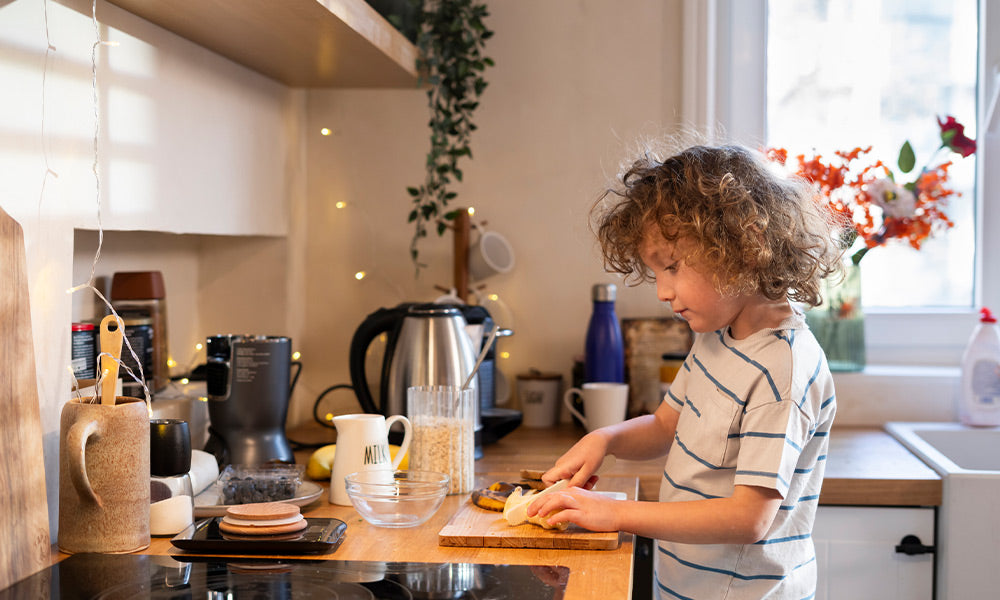
Parenting is full of milestones, but some of the most meaningful changes happen so gradually you barely notice them. One day your children need help with everything; then, they're taking charge and leading the way. This is a sign your toddler is developing the confidence and skills they'll use for years to come.
We hold onto memories of the newborn scrunch, baby's first wobbly steps and early attempts at holding a spoon. But alongside that nostalgia is something just as important: giving our little ones the space to explore, grow, make choices and learn.
Why independence matters
When children are given the opportunity to do things for themselves, they're not just completing tasks — they're building a sense of self. Confidence in their ability to problem solve takes shape as they realize "I can do this."
It isn't always efficient. In fact, most of the time it takes longer. Letting your little one put on their own shoes or clean up might test your patience on a busy morning, but those few extra minutes are where the growth happens. Because, independence is a skill, and all skills take practice.
Start small
One of the simplest ways to encourage autonomy is by offering choices. These small decisions give children a sense of control while still providing structure. Over time, they begin to trust their own judgement and feel more confident in their abilities and decision making.
- Infants (1 - 2 years): Encourage exploration through safe, supervised play. Simple tasks like feeding themselves begin to build independence.
- Toddlers (2 - 3 years): Offer choices like "green shirt or blue shirt?" and allow time for skills such as washing hands or putting on shoes.
- Preschoolers (3 - 5 years): Introduce small responsibilities like tidying up, helping with simple decisions and following daily routines with reduced assistance.
Let effort lead the conversation
It's natural to want to step in and fix things or speed the process up. But self-determination flourishes when we let them take the lead. Instead of focusing on the result, shift attention to the effort.
- "You worked really hard to put your shoes on."
- "I appreciate that you kept trying even when it was hard."
This kind of encouragement builds persistence and reinforces that trying matters more than getting it right the first time.
Create space for independence
Children thrive when self-sufficiency is part of their everyday lives. This can look like:
- Carrying their own backpack or lunchbox
- Helping set the table
- Putting away toys after playtime
- Helping put toothpaste on the toothbrush
Routines are especially powerful. When our little ones know what to expect, they're more likely to take ownership of these moments.
At Kiddie Academy®, every aspect of the classroom is intentionally designed with children in mind. Sinks are positioned at child-friendly heights to support proper handwashing and hygiene, artwork is displayed at eye level to encourage engagement and appreciation for their work, and learning centers with easily accessible materials are arranged to promote independent exploration. During family-style dining, children make choices about which foods to try, serve themselves and ask for seconds, which helps to build their confidence and decision-making skills.
In this environment, children are encouraged to explore their natural curiosity while developing age-appropriate skills in a safe, supportive environment. Through hands-on activities, play-based learning and guided discovery, they build confidence, creativity and independence.
A gentle reminder
Encouraging autonomy doesn't mean stepping away completely. It means staying close, offering guidance and trusting your child to try.
There will be messes. There will be moments where it feels easier to just do it yourself. But giving little ones the chance to participate, contribute and grow is one of the most meaningful ways to support their development.
Because one day, "I can do it myself" turns into "I know how to handle this."